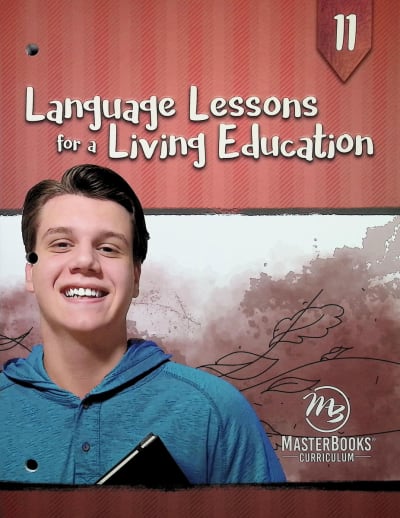
Build upon previous levels of Master Books courses while focusing on 5 types of communication: written, verbal, nonverbal/visual, active listening, and context (examining the audience and setting). While the course’s primary emphasis
is written communication, students will also learn to work with other elements
which influence the writing process. Your student is ready for this course if
they can write a 5-paragraph essay with well-written paragraphs, use grammar
properly, recognize abstract concepts, and use high school–level vocabulary. Students
will refine their writing and analytical skills. Essay assignments are 7-10
paragraphs each, with one essay per quarter. Students will also focus on the
steps to develop quality writing. At this level, students learn APA research
format. This change from MLA requirements in Level 10 is intentional. Students
will be well prepared for either writing and format style in college or their career.
Students follow a weekly pattern, with each day focusing on a different ELA task. Day 1 is a special feature focus (hymn, picture, quotation or Scripture study, and vocabulary). Day 2 is devoted to grammar and punctuation application; Day 3 develops communication skills, including logical reasoning. Day 4 analyzes worldview and literature. Each week ends with review on Friday.
This level emphasizes logic study by examining fallacies and literary devices. Clear communication is key. While strong, logical communication is emphasized, a biweekly feature focuses students on communication with God. Per quarter, students will work on one larger writing project. Instruction guides students step-by-step through different types of writing, including research; cause-effect; persuasive; book reviews; comparison/contrast; some creative writing; and a critical essay. Students practice time management and oral communication with projects. A Communication Clarity section focuses on avoiding communication blunders. At this level, the choice of added literature components is up to student and parent. The author recommends choosing challenging, but not overwhelming, additional reading for students to engage with and respond to.